


 HOME
HOMEHigh Pressure Steel Pipe Hydro Tester for Welded and Spirally Welded Pipes
15 December 2025
In the world of steel pipe manufacturing, distribution, and application — whether for water supply, oil & gas, chemical transport, or structural use — welded and spirally welded (SSAW / LSAW) pipes play a central role. However, their performance and safety hinge critically on rigorous quality inspection before delivery. A high‑pressure steel pipe hydro tester is one of the most effective and widely recognized tools to ensure that every welded or spiral‑welded pipe meets structural integrity, leak‑tightness, and pressure‑bearing requirements.
What is a Hydrostatic Pressure Test / Hydro Tester for Welded & Spiral Pipes?
A hydrostatic test (performed by a hydro tester) involves filling a steel pipe with water (or another incompressible fluid), sealing it, then applying internal pressure — often significantly above its intended service pressure. Because water is nearly incompressible, any weakness, seam defect, crack, or improper weld will reveal itself via leakage or deformation, making hydro testing a powerful, low‑cost, and reliable method of quality control.
When applied to welded or spirally welded pipes, hydro testing ensures that both the pipe body and the welded seams (longitudinal or spiral) can withstand internal pressure without failure — a must for safe operation under pressure.
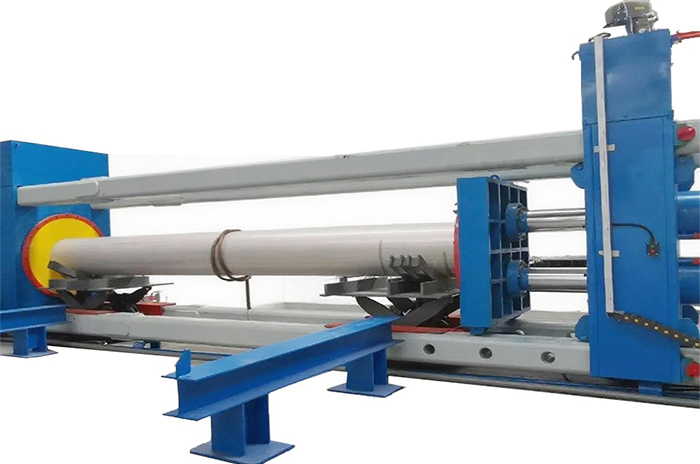
Why Use High‑Pressure Hydro Testing for Welded & Spirally Welded Pipes
-
Detect weld seam defects and internal flaws: Welded or spiral‑welded pipes may harbor defects like incomplete penetration, slag inclusions, porosity, or microcracks. Such flaws might be invisible in visual inspection but can compromise pipe integrity under pressure or after installation. Hydro testing reveals weaknesses before delivery or installation.
-
Ensure compliance with recognized standards: Many standards require that every pipe — including welded and spiral‑welded — undergo hydrostatic test before delivery.
-
Provide documented quality assurance for clients: Passing a hydrostatic test generates traceable proof that pipes meet pressure requirements and are leak‑tight — a strong assurance for buyers, contractors, or end users.
-
Prevent accidents, leaks, and costly failures: By ensuring seam integrity, hydro testing reduces risks of in-service failure, leakage, or rupture — protecting safety, environment, and reputation.
-
Support manufacturing and quality control process: Implementing hydro testing as a standard step helps standardize quality control across batches, allowing consistent delivery and reducing rejection rates or after-sale issues.
Typical Hydrostatic Testing Procedure & Standards for Welded & Spiral Pipes
Below is a typical process and a simplified table summarizing common parameters / standard requirements applied when hydro-testing welded or spirally welded steel pipes.
Common Testing Procedure
-
Pre‑inspection and cleaning
-
Pipe ends and inner surfaces cleaned, welded seams visually inspected or non-destructive tested (e.g. ultrasonics, X‑ray) if required.
-
-
Sealing & filling
-
Both ends sealed with appropriate end caps / hydraulic heads; the pipe is filled completely with water (air purged).
-
-
Pressurizing
-
Internal pressure is raised to the required hydrostatic test pressure (see table below for calculation guidelines).
-
-
Holding (soak) time
-
Pressure is maintained for a specified duration to observe any leakage or seam weakness.
-
-
Inspection & evaluation
-
Check for leaks, visible seepage, deformation, pressure drop. If the pipe passes, it is deemed qualified; otherwise it is rejected or repaired and re-tested (provided repairs are allowed under standard).
-
-
Documentation and marking
-
Each tested pipe is often marked (batch number, specification, grade) to trace test results.
-
Typical Test Pressure & Retention Time — Example Specification Table
|
Parameter / Condition |
Calculation or Requirement |
|
Hydrostatic test pressure formula |
P = 2 · S · T / D where: S = allowable stress (e.g. hydrostatic‑test stress), T = nominal wall thickness, D = outside diameter |
|
Test Stress (S) typically used |
60% of minimum yield strength for many spiral‑pipe standards. |
|
Holding time after reaching test pressure |
For pipes with nominal outer diameter (D) < 508 mm: ≥ 5 seconds; for D ≥ 508 mm: ≥ 10 seconds. |
|
Weld seam inspection (for repaired or critical-service pipes) |
Non‑destructive testing (X‑ray or ultrasonic) for weld seams — often 100% for flammable fluids, or at least sample inspection for general use pipes. |
Some standards for welded or spirally welded pipe specify even stricter hydrostatic test requirements, especially for high-pressure applications, or when transporting oil, gas, chemicals, or other critical fluids.
When & Where High‑Pressure Hydro Tester Is Most Important
A high-pressure steel pipe hydro tester is especially important in the following scenarios:
-
Spiral‑welded (SSAW / LSAW) steel pipes for oil & gas, water pipelines, chemical transport. Weld seams and body must be verified under pressure.
-
Longitudinally welded pipes or general welded steel pipes — when used under pressure or critical conditions, seam integrity must be ensured.
-
Projects requiring compliance with recognized standards or client quality assurance — hydro test documentation is often required.
-
High-pressure service, pipelines, industrial fluid transport, or safety‑sensitive pipelines — where failure would have serious consequences.
-
Batch production & export — to guarantee uniform quality across batches and to supply internationally with test proof, reducing potential liability.
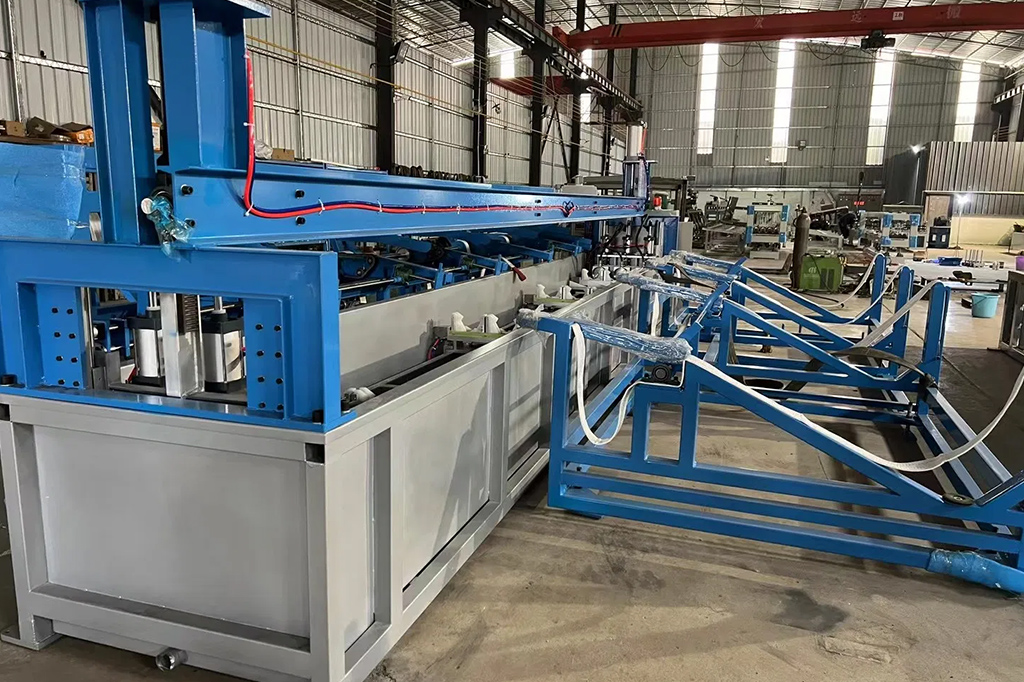
Why Investing in a High‑Pressure Hydro Tester Adds Value for Manufacturers & Suppliers
-
Standardised quality control: Using a hydro tester for every pipe ensures all products are consistently checked and meet the same criteria.
-
Reduced risk and liability: Detects hidden defects early, reduces risk of in‑field failures or leaks, avoids costly recalls or replacements.
-
Compliance with regulations & client requirements: Many pipeline projects, especially in oil, gas, or municipal water supply, demand hydro‑tested pipes and documentation.
-
Customer confidence & competitive advantage: Providing test‑certified, hydro‑tested welded or spiral pipes positions a supplier as professional, reliable, and quality-focused.
-
Better production efficiency: Automated or semi‑automated hydro testers can streamline inspection, integrating into production lines without creating major bottlenecks.
For welded and spirally welded steel pipes, a high‑pressure steel pipe hydro tester is not a luxury — it is an essential part of quality assurance, safety, and compliance. Through hydrostatic testing, manufacturers and suppliers can guarantee every pipe is leak-free, structurally sound, and capable of withstanding design pressure. For customers and end users, it translates to reliability, safety, and long-term confidence.
Whether you produce small-diameter water pipes, large-diameter oil/gas pipelines, or industrial pressure pipes, integrating hydro testing into your inspection protocol — and properly documenting results — will significantly enhance product quality, reduce risks, and improve your competitiveness in global markets.


