


 HOME
HOMESteel Pipe Hydro Tester Compliant with API SPEC 5L Standards
17 December 2025
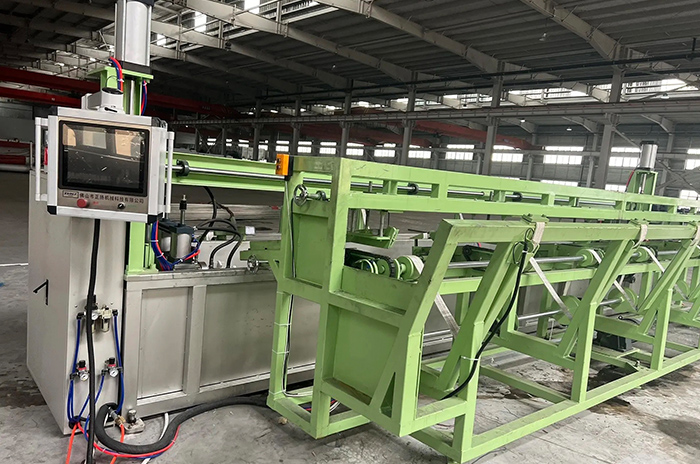
In pipeline manufacturing and supply — especially for oil, gas, water, and industrial fluid transport — compliance with recognized standards is essential not only for safety and reliability, but also for market acceptance. For line pipes manufactured under API SPEC 5L, hydrostatic testing is a critical step. A properly designed steel pipe hydro tester, aligned with API 5L requirements, ensures that every pipe meets strength, integrity, and leak‑tightness criteria before delivery or installation.
What Is API SPEC 5L — and Why Hydro Testing Matters
API SPEC 5L defines requirements for pipe manufacture, testing, and delivery for line pipes used in pipeline transportation. Options include seamless (SMLS) and welded/ welded‑seam pipes (e.g., ERW, SAW, etc.). Under API 5L, each pipe must pass a hydrostatic (hydro) test — ensuring there is no leakage through the weld seam or the pipe body.
Hydrostatic testing under API 5L helps detect latent defects — small cracks, poor welds, internal flaws — that might not be revealed by visual inspection or other non-destructive methods alone. This adds a reliable “real‑world simulation” before pipelines enter service, improving long-term safety and reducing failure risk.
Key Hydrostatic Test Requirements under API 5L
Here’s a summary of the main hydrostatic test provisions as per API 5L (often referenced in the 46th Edition line‑pipe spec).
|
Condition / Pipe Type |
Minimum Holding (Stabilization) Time Under Test Pressure |
|
Seamless pipe (SMLS) or welded pipe with outside diameter ≤ 457 mm (18 in) |
≥ 5 seconds |
|
Welded pipe with outside diameter > 457 mm (18 in) |
≥ 10 seconds |
-
Be equipped with a recording gauge or interlocking/automatic device to log test pressure and duration for each length of pipe — ensuring traceability and verifiability.
-
Use the minimum permissible wall thickness (as per the pipe specification) when calculating required test pressure, as defined in API 5L “Hydrostatic Test” clause (10.2.6).
These requirements aim to guarantee that every pipe delivered meets the strength, leak‑tightness, and safety expectations of clients and regulators.
Typical Hydrostatic Test Procedure (for API 5L Line Pipes)
A typical process flow for API‑compliant hydrostatic testing might look like this:
-
Pre‑inspection and preparation
-
Clean the pipe (internal/external), remove debris, ensure weld seams are visible.
-
Perform any required non-destructive testing (e.g., ultrasonic or radiographic) on welds or body, when applicable. (Note: such NDT is often part of the broader quality control regime under API 5L.)
-
-
Sealing & filling the pipe
-
Seal both ends (plain‑end, or with couplings if specified).
-
Fill the pipe fully with water (or another suitable fluid), displacing air to ensure full contact.
-
-
Pressurizing
-
Raise internal pressure to calculated hydrostatic test pressure based on pipe’s specified yield strength, wall thickness, and diameter. Common practice uses the formula:P = 2 * S * t / D
-
where S = allowable hoop stress (based on minimum yield strength), t = nominal wall thickness, D = outside diameter.
-
-
Holding (Stabilization) Period
-
Maintain the test pressure for at least the minimum required time (5s or 10s depending on pipe size/type).
-
-
Inspection & Evaluation
-
Monitor for pressure drop, audible/visible leaks, deformations, or other defects.
-
If no leakage or defect — the pipe is considered qualified; otherwise it must be rejected or re‑tested (if allowable under quality procedures).
-
-
Documentation & Certification
-
Record pressure chart and test duration for each pipe length.
-
Provide test certificate/report to client, including pipe grade, dimension, test conditions, pass/fail result. This ensures traceability and compliance with API 5L requirements.
Beyond Hydro Test — What Else API 5L Requires (for Full Compliance)
API 5L doesn’t rely solely on hydro testing. A full compliance regime often includes:
-
Chemical composition check of raw steel, to ensure material meets the designated grade (e.g. X‑grades, GR B, etc.).
-
Mechanical tests: tensile test (yield strength, tensile strength, elongation), bend test, flattening test — these ensure welds and pipe body have acceptable ductility and strength.
-
Non‑destructive testing (NDT) of weld seams (e.g. ultrasonic, radiographic) — especially for welded or SAW/LSAW pipes — to detect internal defects before hydro test.
-
Quality documentation: mill test certificates (MTC), inspection and test reports, marking/identification of each pipe — key for traceability and acceptance by clients.
Combining hydrostatic testing with these additional QC steps ensures that the pipe not only holds pressure but also meets chemical, mechanical, and metallurgical integrity required for safe, long-term use.
Why Using a Dedicated API‑Compliant Steel Pipe Hydro Tester Matters
Investing in a hydro tester aligned with API 5L — and integrating it into your manufacturing or inspection workflow — offers several advantages:
-
Compliance & market acceptance: Pipes certified under API 5L with hydro test records are widely accepted in oil, gas, water transport industries worldwide.
-
Safety and reliability: Hydro testing reveals hidden flaws that could lead to leaks, ruptures, or catastrophic failures upon service — protecting clients, environment, and operator reputation.
-
Traceability and transparency: With per‑pipe pressure/time records and test certificates, suppliers can provide clients with documented proof, increasing credibility especially for large contracts or export markets.
-
Production consistency & quality control: When every pipe is tested under identical, standardized conditions, batch-to-batch consistency improves and defects are caught before delivery or installation.
-
Competitive advantage: Suppliers who can guarantee API‑compliant testing and documentation are more likely to win bids, trusted by clients, especially in regulated industries (oil & gas, municipal water, etc.).
For steel pipes intended for pipeline services — whether seamless or welded — complying with API SPEC 5L standards and performing hydrostatic testing using a properly configured hydro tester is not optional. It is a fundamental requirement to guarantee pipe integrity, safety, and long-term reliability.


