


 HOME
HOMECommissioning Best Practices for Pipe Hydro Testing Machines
24 July 2026
Successful commissioning is not confirmed by achieving the specified test pressure once—it is demonstrated by producing repeatable pressure curves, stable sealing performance, reliable measurement accuracy, and consistent cycle times under continuous production conditions. Most commissioning problems are not caused by defective components but by poor system integration, including trapped air, hydraulic compliance, valve dynamics, sensor response, and control logic. An effective commissioning process therefore validates the interaction between mechanical, hydraulic, electrical, and automation systems before optimizing production efficiency. Establishing this baseline is essential for long-term process capability, predictive maintenance, and compliance with industrial testing standards.
Engineering Objectives: Commissioning Defines Long-Term Process Capability
Factory Acceptance Testing (FAT) proves that a machine functions as designed. Site commissioning determines whether it can sustain that performance in a production environment.
These are fundamentally different objectives.
During commissioning, engineers are not evaluating individual components. They are evaluating whether the complete testing system behaves predictably when exposed to real operating conditions—different pipe sizes, varying hydraulic temperatures, production interruptions, repeated pressure cycles, and operator interaction.
For this reason, the primary objective of commissioning should never be "passing a pressure test." It should be establishing a repeatable operating baseline that remains stable regardless of normal production variation.
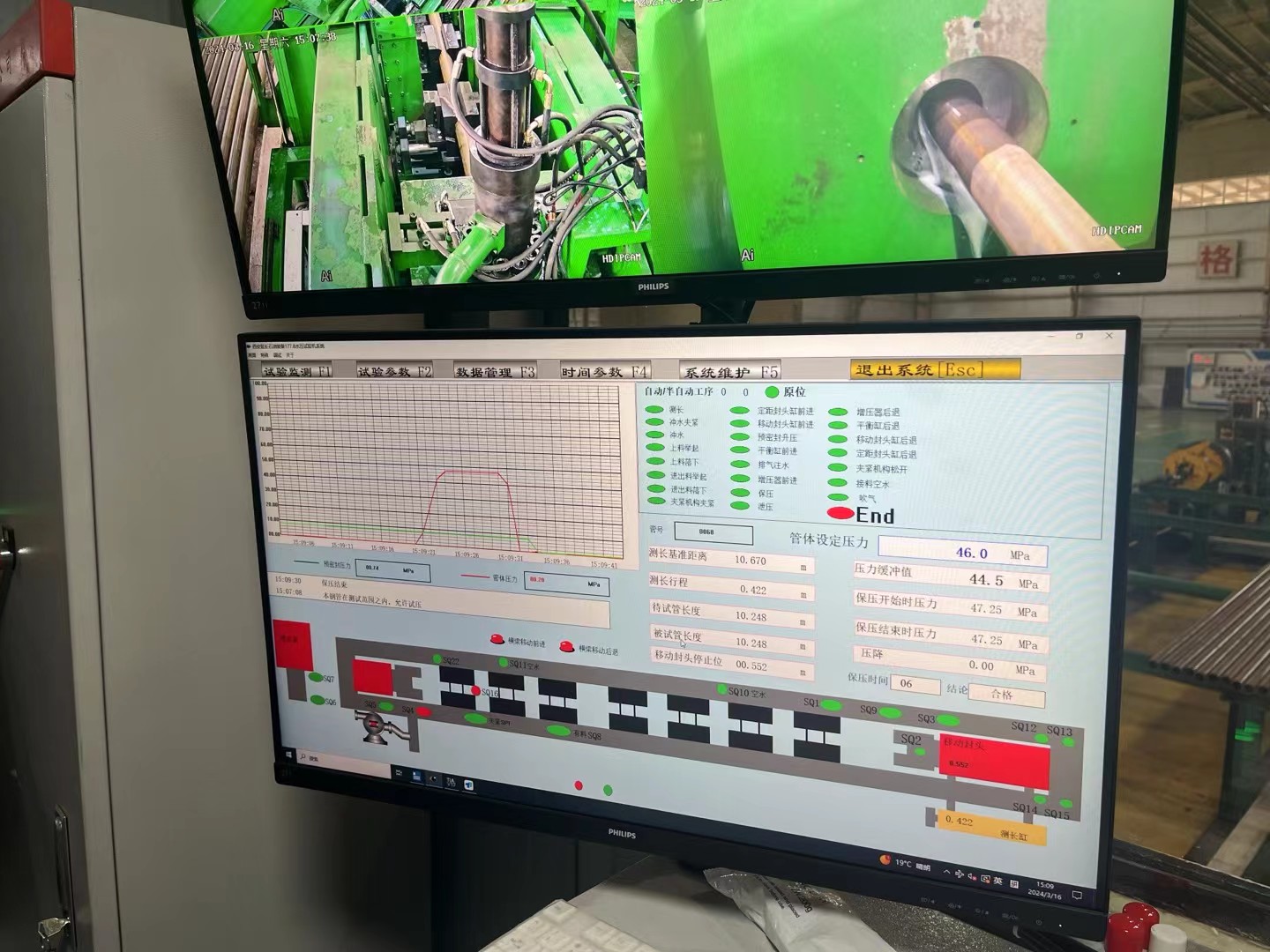
A properly commissioned hydro testing machine for pipe should consistently demonstrate:
- Stable pressure build-up without excessive overshoot.
- Uniform sealing performance across the approved product range.
- Repeatable pressure holding characteristics from cycle to cycle.
- Reliable measurement traceability under operating conditions.
- Predictable automation sequences and fault recovery.
- Consistent production rhythm after thermal equilibrium is reached.
These characteristics define process capability, not simply machine functionality.
Engineering Principle: Commission the System, Not the Components
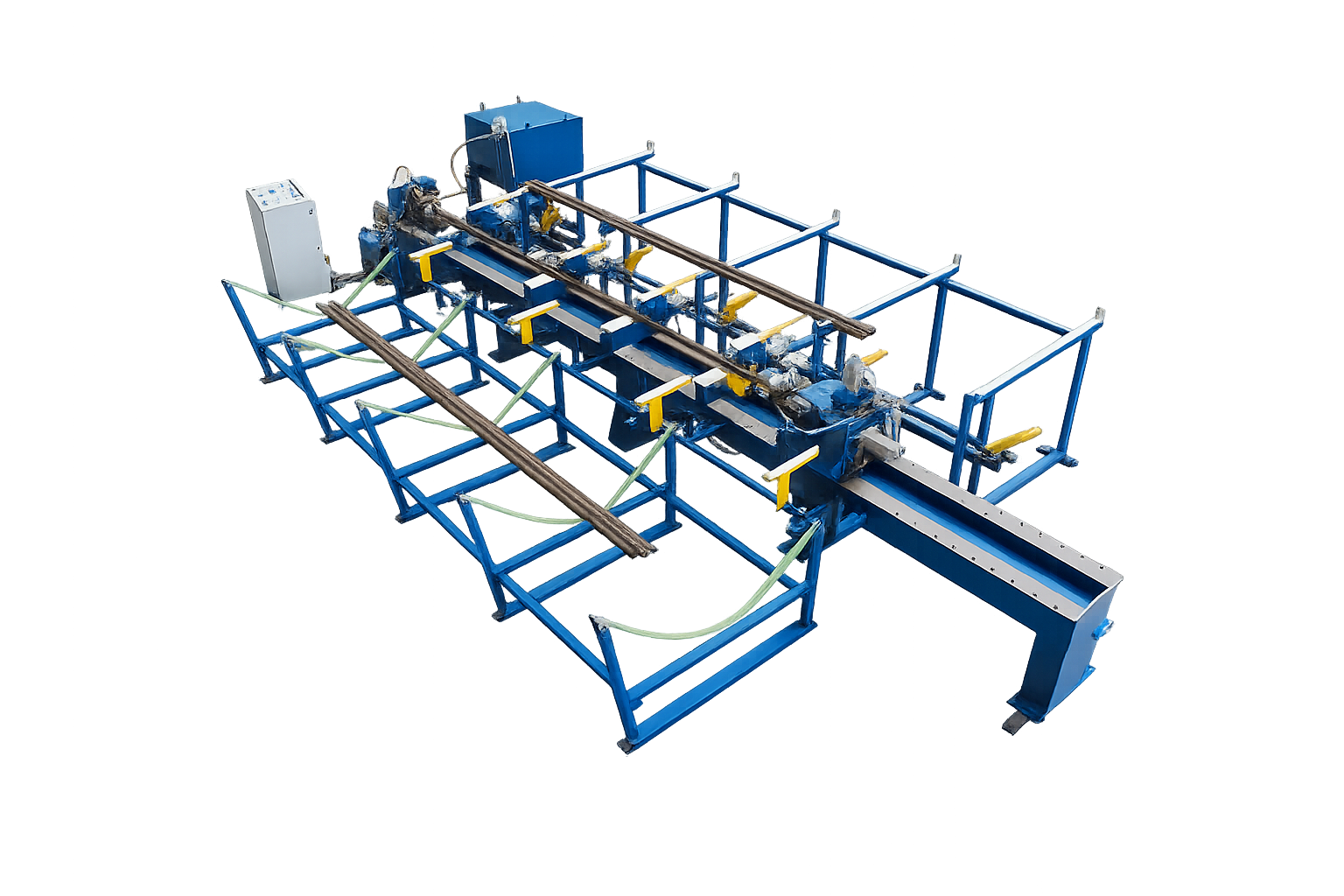
Hydrostatic testing equipment is often viewed as several independent subsystems:
- Hydraulic unit
- High-pressure water system
- Mechanical structure
- Instrumentation
- PLC control
In reality, these systems operate as a single dynamic process.
A pressure transmitter cannot compensate for unstable hydraulic flow.
A proportional valve cannot eliminate trapped air.
A sophisticated PLC cannot correct mechanical misalignment.
Likewise, increasing sealing force may stop leakage while simultaneously increasing friction, reducing seal life, and altering hydraulic response.
This interaction explains why replacing components during commissioning rarely resolves persistent instability. The objective is not to optimize each subsystem individually, but to understand how they influence one another during every stage of the pressure cycle.
Experienced commissioning engineers therefore focus on system behaviour, not individual hardware performance.
Engineering Decision
Should commissioning prioritize production speed or process stability?
The answer is process stability.
Cycle time optimization should begin only after the machine demonstrates repeatable pressure control under continuous operation.
Reducing pressure build-up time before establishing control stability often creates oscillation, pressure overshoot, and inconsistent holding performance. The apparent productivity gain is usually offset by additional stabilization time, rejected tests, and repeated parameter adjustments.
In industrial production, a machine capable of completing 10,000 identical test cycles is considerably more valuable than one capable of completing one exceptionally fast cycle.
Understanding System Dynamics During Commissioning
One of the reasons commissioning is frequently underestimated is that pressure testing appears deceptively simple.
Pressure increases.
Pressure holds.
Pressure releases.
From an engineering perspective, however, every stage reflects a different physical behaviour of the complete testing system.
Pressure Build-up
│
▼
Pressure Stabilization
│
▼
Pressure Holding
│
▼
Controlled Depressurization
Each phase validates a different engineering assumption.
|
Pressure Stage |
Primary Engineering Objective |
If Unstable |
Typical Root Cause |
|
Build-up |
Verify hydraulic response and control stability |
Overshoot, oscillation |
Excessive ramp rate, trapped air, valve delay |
|
Stabilization |
Confirm dynamic equilibrium |
Long settling time |
Hydraulic compliance, inappropriate controller tuning |
|
Holding |
Verify sealing and measurement integrity |
Pressure decay |
Internal leakage, thermal variation, sensor drift |
|
Depressurization |
Ensure controlled energy release |
Hydraulic shock |
Valve sequencing or pressure release strategy |
Notice that none of these observations immediately identifies a failed component.
Instead, they describe system behaviour.
Commissioning should therefore begin by understanding how the system behaves before attempting to modify any control parameters.
Pressure curves contain significantly more diagnostic information than peak pressure values. Experienced engineers often identify developing commissioning issues by comparing the shape of repeated pressure curves long before alarms or product failures occur.
Critical Engineering Variables That Should Be Established During Commissioning
Most commissioning documents specify target values.
Far fewer define acceptable operating variation.
From a production perspective, variation is often more important than the nominal value itself.
The table below summarizes the variables that should become part of the machine's commissioning baseline.
|
Engineering Variable |
Why It Matters |
If Incorrect |
Commissioning Strategy |
|
Pressure Ramp Rate |
Determines transient pressure behaviour |
Overshoot, hydraulic shock, unstable control |
Increase progressively while monitoring curve stability rather than cycle time alone |
|
Pressure Holding Stability |
Directly affects test repeatability |
False rejection or inconsistent qualification |
Verify over repeated production cycles after thermal equilibrium |
|
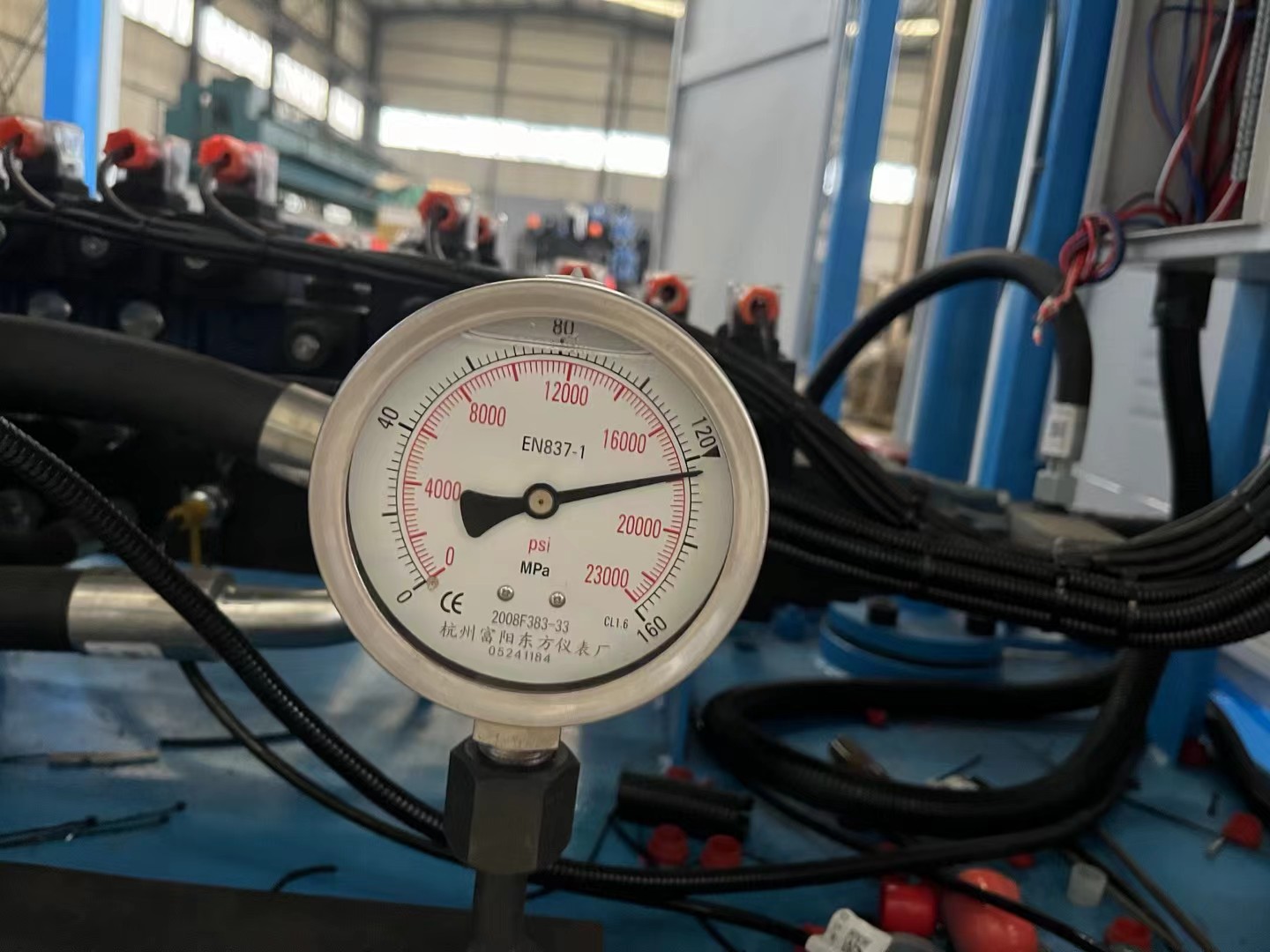
Hydraulic Oil Temperature |
Changes oil viscosity and valve response |
Different controller behaviour between cold and warm operation |
Final parameter tuning should be performed at normal operating temperature |
|
Pressure Sampling Frequency |
Determines visibility of transient events |
Short-duration instability remains undetected |
Select a sampling rate appropriate to system dynamics, not only data storage capacity |
|
Seal Compression Force |
Balances sealing reliability with seal life |
Leakage or premature seal wear |
Optimize for minimum effective compression instead of maximum cylinder force |
|
Water Circuit Condition |
Influences system compressibility |
Oscillation, unstable pressure holding |
Confirm complete venting before controller optimization |
A commissioning report should record not only these values but also the acceptable range within which they remain stable.
Those ranges become the reference for future maintenance, troubleshooting, and process improvement.
Failure Analysis: Why Most Commissioning Problems Are Misdiagnosed
A recurring pattern observed during field commissioning is that engineers tend to adjust the control system before confirming the mechanical and hydraulic conditions.
This approach often treats the symptom rather than the cause.
Consider a pressure curve exhibiting moderate oscillation during stabilization.
The immediate assumption is usually incorrect PID tuning.
However, several different mechanisms can produce nearly identical pressure behaviour.
|
Symptom |
Physical Mechanism |
Verification Method |
Engineering Action |
|
Pressure overshoot |
Hydraulic response exceeds controller expectation |
Compare pressure curve with valve response |
Reduce ramp rate and verify hydraulic stiffness before adjusting controller gain |
|
Repeated oscillation |
Excessive system compliance or delayed feedback |
Check for trapped air and response latency |
Eliminate hydraulic instability before PID optimization |
|
Progressive pressure decay |
Leakage or thermal equilibrium shift |
Isolate hydraulic and water circuits separately |
Identify leakage path before increasing sealing force |
|
Intermittent seal leakage |
Uneven mechanical loading |
Inspect sealing contact pattern under pressure |
Correct alignment rather than replacing seals |
|
Different results after several hours of operation |
Hydraulic properties change with temperature |
Compare cold-start and stabilized operation |
Tune parameters only after normal operating temperature is achieved |
The engineering objective is not simply restoring stable pressure.
It is identifying which physical mechanism caused the instability.
Changing controller parameters without understanding the underlying mechanism often creates a new problem while masking the original one.
Field Experience
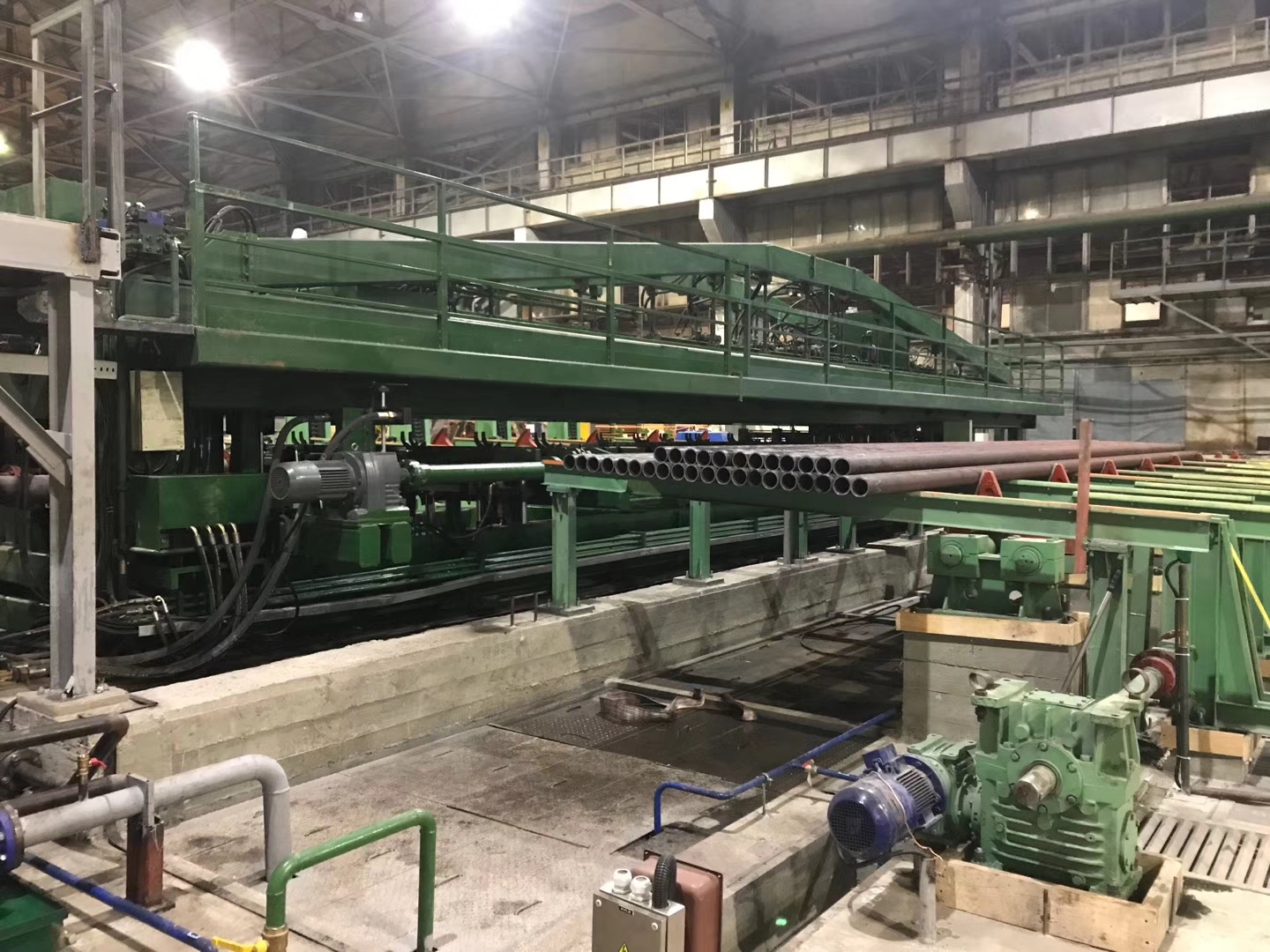
During commissioning of large-diameter pipe hydro testing equipment, unstable pressure holding is frequently attributed to pressure transmitter accuracy.
In practice, the transmitter is often functioning correctly.
The actual cause is residual air trapped within the water circuit, increasing the effective compressibility of the system. Because the controller reacts to delayed pressure feedback, it continually over-corrects, producing oscillation that resembles poor PID tuning.
After complete venting and a second tuning cycle, the pressure curve typically stabilizes without replacing any instrumentation.
This is a reminder that commissioning should always begin with physical verification before software optimization.
Build a Stable Baseline Before Optimizing Throughput
One of the most common commissioning mistakes is treating baseline establishment and production optimization as the same activity.
They are not.
Baseline commissioning answers a single question:
Can the machine produce identical results under identical conditions?
Only after the answer is consistently yes should engineers begin reducing cycle time or increasing production throughput.
The following practices have consistently proven effective across different pipe diameters, pressure classes, and production environments.
Commissioning Best Practice Checklist
|
Practice |
Engineering Purpose |
Consequence if Ignored |
|
Tune the machine after hydraulic oil reaches operating temperature |
Eliminates viscosity-related control variation |
Stable cold-start performance but unstable production performance |
|
Validate multiple pipe specifications instead of one reference pipe |
Confirms process capability across the production range |
Unexpected instability during product changeover |
|
Record complete pressure curves, not only maximum pressure |
Reveals transient instability before defects appear |
Root causes remain hidden until production failures occur |
|
Verify mechanical alignment under hydraulic load |
Prevents uneven sealing force distribution |
Premature seal wear and intermittent leakage |
|
Freeze baseline parameters after validation |
Establishes a repeatable engineering reference |
Continuous parameter changes conceal developing faults |
Machines requiring daily PID adjustments are rarely suffering from poor controller design. More often, they are compensating for unresolved hydraulic, mechanical, or instrumentation problems.
Stable equipment should require only occasional optimization—not continuous retuning.
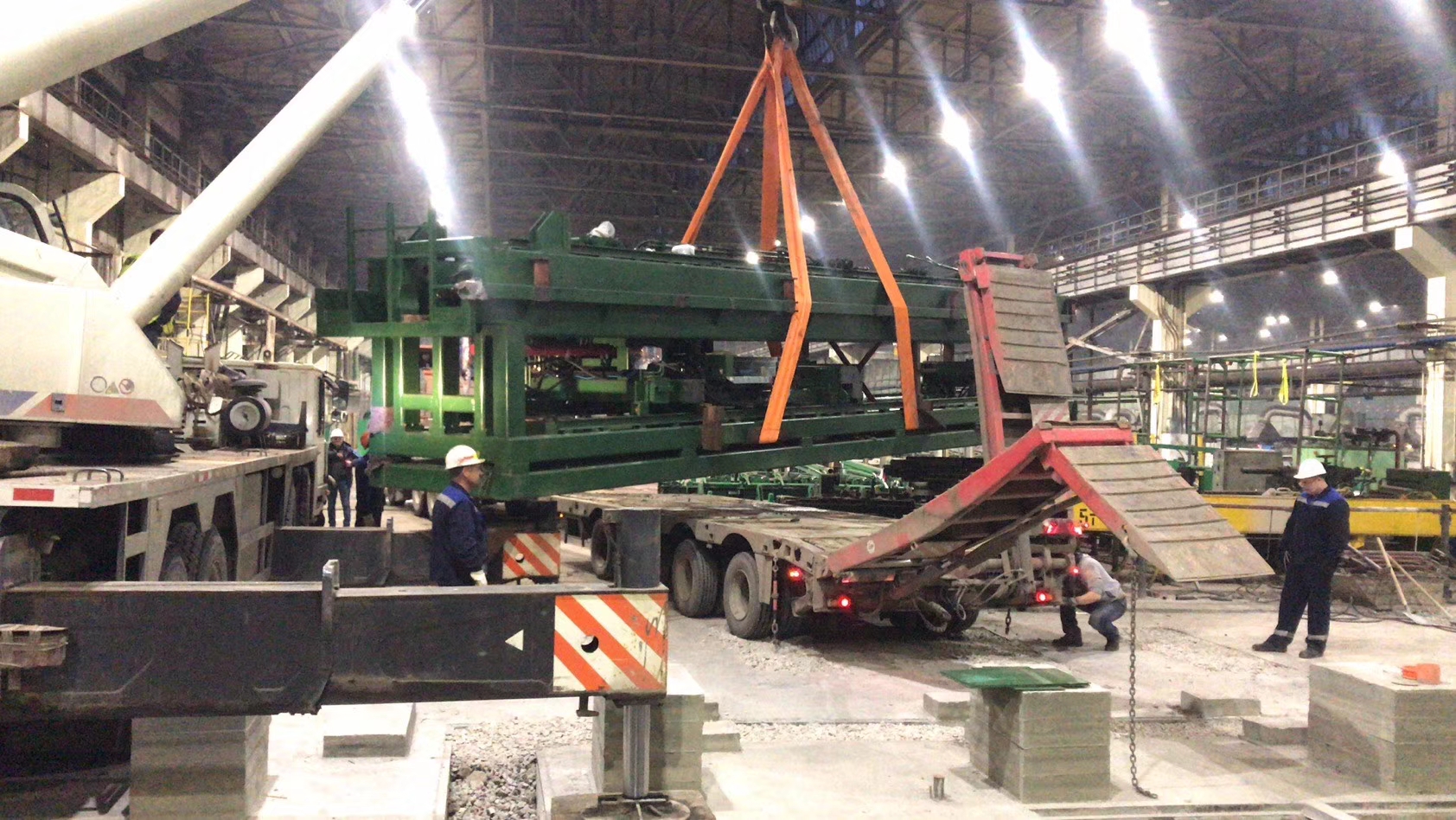
Engineering Trade-Off: The Fastest Commissioning Is Rarely the Most Productive
Every commissioning project eventually reaches the same decision.
Should the system be tuned for the shortest possible cycle time or the most stable pressure response?
The answer depends on production priorities, but the engineering trade-off should always be understood before parameters are changed.
Pressure Control Strategy Comparison
|
Strategy |
Advantages |
Engineering Limitations |
Recommended Use |
|
Aggressive pressure ramp |
Shortest theoretical cycle time |
Higher overshoot risk and longer stabilization |
Small-volume systems with highly repeatable products |
|
Moderate pressure ramp |
Excellent pressure stability and repeatability |
Slightly longer pressure build-up |
Preferred for most production environments |
|
Adaptive pressure ramp |
Balances productivity and stability automatically |
Higher control complexity |
High-volume automated production lines with mixed specifications |
In practice, reducing the pressure build-up time by one second provides little value if two additional seconds are required to stabilize the pressure before inspection begins.
The objective of commissioning is therefore minimum total cycle variation, not minimum pressure build-up time.
Standards Interpretation: Commissioning Should Demonstrate Compliance, Not Assume It
Industrial standards define the expected performance of the hydrostatic testing process, but they intentionally leave equipment manufacturers flexibility in how that performance is achieved.
This makes commissioning the critical link between machine design and regulatory compliance.
Standards and Commissioning Focus
|
Standard |
Engineering Focus During Commissioning |
Why It Matters |
|
API 5L |
Pressure stability, holding time, traceable records |
Demonstrates repeatable hydrostatic qualification for line pipe |
|
API Spec 5CT |
Validation across multiple product specifications |
Confirms repeatability for OCTG production rather than a single reference pipe |
|
ASTM A530/A530M |
Measurement accuracy and documented testing procedure |
Ensures acceptance decisions are based on reliable data |
|
ISO 9001 |
Controlled commissioning records and parameter management |
Supports long-term quality consistency and process traceability |
|
ISO/IEC 17025 |
Calibration traceability of measuring instruments |
Confirms confidence in recorded pressure values |
A commissioning report should therefore document not only what was tested, but also why the selected parameters were accepted.
This engineering rationale becomes invaluable during customer audits, equipment upgrades, and future troubleshooting.
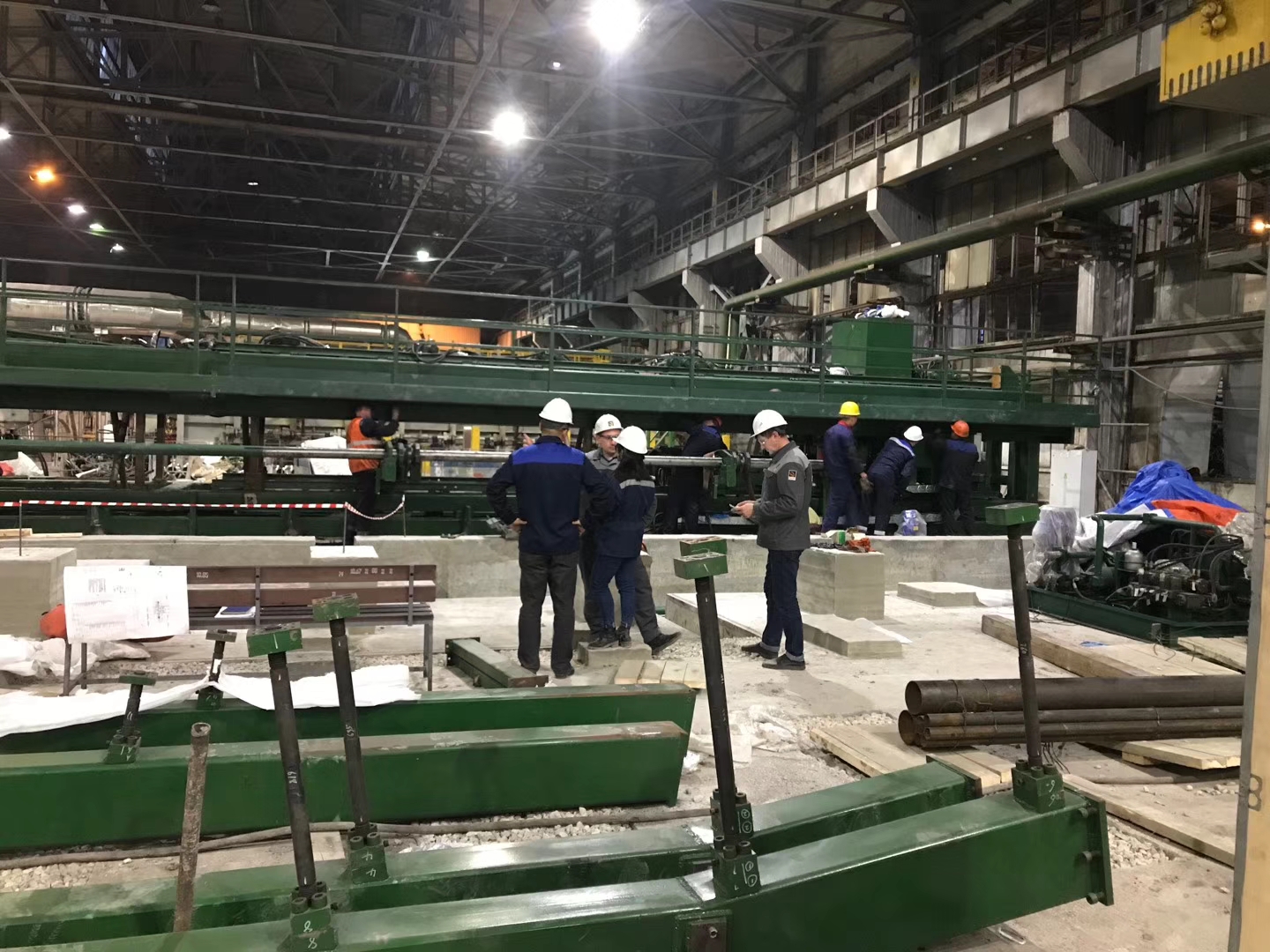
Future Commissioning Technologies: From Reactive Adjustment to Predictive Validation
The next generation of pipe hydro testing equipment will not simply automate existing commissioning procedures.
It will reduce engineering uncertainty before production begins.
Three technologies are likely to have the greatest practical impact.
Adaptive Pressure Control
Instead of relying on fixed controller parameters, adaptive algorithms continuously compensate for changes in hydraulic response, pipe volume, and operating conditions.
The primary benefit is not faster testing—it is more consistent pressure behavior across different production batches.
Digital Twin Commissioning
Digital twins allow PLC logic, hydraulic sequences, and process timing to be verified in a virtual environment before physical commissioning starts.
For custom production lines, this approach can significantly reduce on-site debugging while improving commissioning repeatability.
AI-Assisted Pressure Curve Analysis
Modern data acquisition systems collect thousands of pressure curves every production shift.
AI-based analysis can identify subtle changes in pressure response that are almost impossible to recognize manually, providing early warning of valve wear, hydraulic degradation, seal deterioration, or measurement drift.
Engineering judgement remains essential, but diagnostic speed and consistency improve substantially.
Key Technical Takeaways
Successful commissioning is not defined by a successful acceptance test.
It is defined by establishing a repeatable engineering baseline that remains stable throughout the machine's operational life.
For a hydro testing machine for pipe, long-term performance depends on five engineering principles:
- Validate the complete system rather than individual components.
- Diagnose physical mechanisms before adjusting control parameters.
- Optimize repeatability before production speed.
- Record operating ranges instead of isolated target values.
- Preserve commissioning baseline data as the reference for future maintenance and process improvement.
Perhaps the most important lesson from field commissioning is that pressure instability is rarely an isolated control problem. Mechanical alignment, hydraulic stiffness, trapped air, thermal equilibrium, and measurement dynamics frequently interact to produce similar symptoms.
Understanding these interactions—not simply correcting them—is what distinguishes a well-commissioned production system from one that requires continuous intervention.
Engineering Reference Checklist
|
Verification Item |
Engineering Acceptance Criterion |
|
Mechanical alignment |
Verified under full operating load |
|
Hydraulic response |
Stable throughout repeated production cycles |
|
Water circuit |
Fully vented with repeatable pressure behavior |
|
Pressure measurement |
Traceable and verified under operating conditions |
|
Automation logic |
All sequences and safety interlocks validated |
|
Pressure curve |
Stable build-up, holding, and release across repeated cycles |
|
Baseline records |
Documented after thermal equilibrium is reached |


