


 HOME
HOMEWhy seamless steel pipe manufacturers rely on hydrostatic testing machine
10 December 2025
For seamless steel pipe manufacturers, the absence of a welded seam does not eliminate the need to verify pressure integrity. Seamless pipes can still contain material discontinuities, internal imperfections, wall-thickness variations, or process-related defects that are not reliably identified through visual inspection alone. This is why hydrostatic testing remains an important quality-control step in many seamless pipe production lines.
A hydrostatic testing machine allows manufacturers to verify whether a finished seamless steel pipe can withstand a specified internal pressure without unacceptable leakage or loss of pressure integrity. More importantly, a dedicated testing machine makes this verification repeatable, controlled, and suitable for production-scale manufacturing.
Seamless Pipe Does Not Mean Defect-Free
The main reason seamless steel pipe manufacturers rely on hydrostatic testing is simple: seamless construction removes the welded seam, but it does not remove every potential source of pressure-related defects.
Seamless pipe production involves several forming and heat-processing stages, including billet preparation, heating, piercing, elongation, rolling, sizing, heat treatment, and finishing. Variations or discontinuities introduced during these processes can affect the pressure-bearing capability of the finished pipe.
Potential concerns may include:
- Internal discontinuities or material imperfections
- Local variations in wall thickness
- Surface or subsurface defects that can affect pressure containment
- Process-related imperfections introduced during forming
- Defects that are difficult to identify through visual inspection
These conditions do not necessarily mean that a pipe will fail in service. However, for pressure-containing applications, manufacturers need a controlled method of verifying the integrity of the finished product.
Hydrostatic testing provides that additional verification.
Hydrostatic Testing Verifies Pressure Integrity
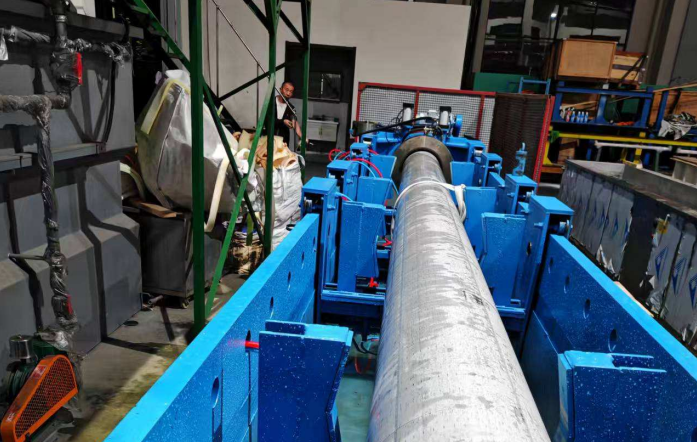
The fundamental purpose of hydrostatic testing is not simply to check whether a pipe looks acceptable. It is to subject the pipe to a specified internal pressure using water or another suitable incompressible test medium and determine whether it maintains the required pressure integrity.
During testing, the pipe is filled with the test medium, air is removed as required by the testing procedure, and pressure is increased to the specified test level. The pressure is then maintained for the required holding period while the system monitors the pipe for unacceptable leakage, pressure loss, or other indications of failure.
For a seamless steel pipe manufacturer, this provides an important distinction:
Dimensional and visual inspections evaluate the condition of the pipe, while hydrostatic testing verifies its pressure-containing performance under a defined test condition.
The actual test pressure, holding time, acceptance criteria, and testing procedure depend on the applicable product specification, standard, and customer requirements. Therefore, hydrostatic testing should be treated as a controlled manufacturing process rather than a generic pressure check.
Why Manufacturers Depend on Dedicated Hydrostatic Testing Machines
Testing one pipe under pressure is fundamentally different from testing thousands of pipes consistently in a production environment.
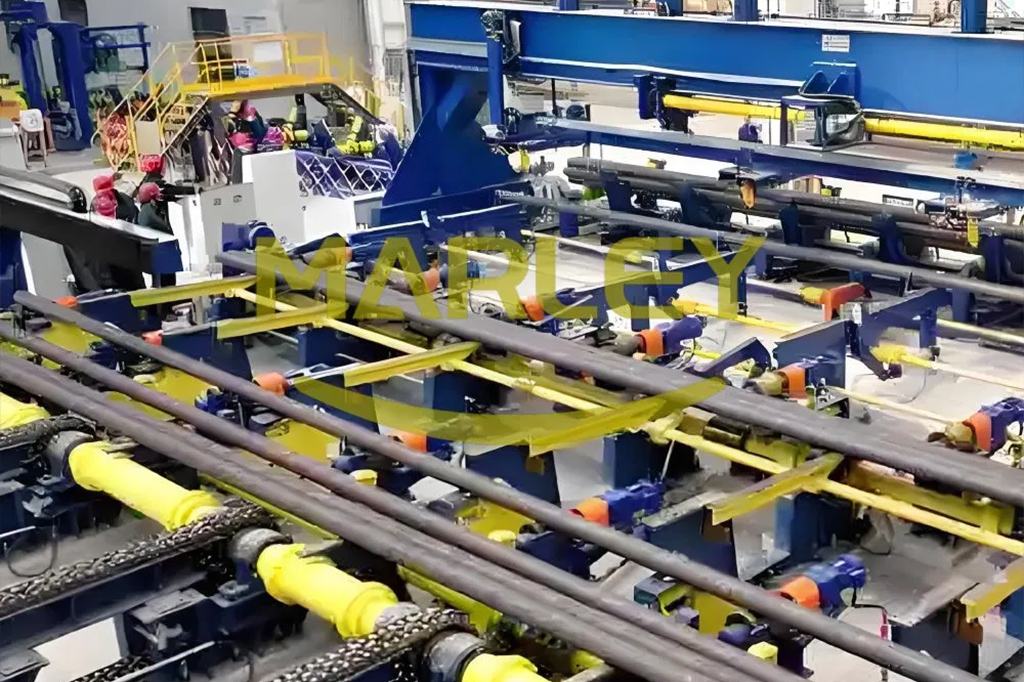
A seamless pipe mill needs a testing process that can repeatedly control several critical operations, including pipe loading, sealing, water filling, pressure generation, pressure stabilization, pressure holding, and unloading.
This is where a dedicated hydro testing machine for pipe becomes important.
A properly engineered machine can provide controlled and repeatable testing conditions for different pipe sizes and production requirements. Depending on the machine configuration, automated functions can include:
- Pipe positioning and handling
- End sealing
- Test-medium filling
- Pressure boosting
- Pressure stabilization
- Pressure holding
- Pressure monitoring
- Test-result recording
- Automatic unloading
The purpose of this automation is not simply to reduce operator involvement. It is to make the testing process more consistent from one pipe to the next.
For a production mill, consistency is critical because the value of hydrostatic testing depends on applying the specified test conditions reliably across the required production quantity.
Consistency Is a Major Reason for Using Hydrostatic Testing Equipment
Manual pressure testing can introduce variations in filling, pressurization, holding time, pressure monitoring, and operator judgment. Those variations become increasingly difficult to control as production volume increases.
A dedicated hydrostatic testing machine provides a controlled testing sequence.
For example, the system can be configured so that the pressure follows a defined testing procedure rather than depending entirely on manual operation. Pressure can be monitored continuously, the required holding period can be controlled automatically, and test information can be recorded for quality-control purposes.
This repeatability is particularly valuable for seamless pipe manufacturers supplying applications where documented inspection and consistent product quality are important.
The objective is not merely to test more pipes. It is to ensure that the same basic testing requirements are applied consistently across the production batch.
Hydrostatic Testing Adds a Final Pressure-Integrity Check
Seamless steel pipe production already involves multiple inspection and quality-control stages. Hydrostatic testing does not replace those inspections.
Instead, it provides a complementary verification step.
A manufacturer may use dimensional inspection, visual examination, chemical analysis, mechanical testing, and various nondestructive testing methods to evaluate different characteristics of the pipe. Each method addresses a different aspect of product quality.
Hydrostatic testing has a specific role: confirming pressure containment under the specified hydrostatic test condition.
This is one reason it remains important even when a seamless pipe has already passed other inspections.
A pipe can meet dimensional requirements and pass visual inspection while still requiring pressure testing to verify its pressure integrity. Conversely, hydrostatic testing should not be considered a substitute for other required inspections when the applicable specification calls for them.
The strength of a complete quality-control system comes from using the appropriate inspection method for the characteristic being verified.
Production Requirement0s Make Equipment Design Important
For seamless steel pipe manufacturers, the testing machine itself must be matched to the production process.
Pipe diameter, length, wall thickness, required test pressure, testing cycle time, sealing method, handling arrangement, and production capacity can all influence machine configuration.
A machine designed for short, small-diameter pipes may not be suitable for large-diameter or long seamless pipes. Similarly, a testing system intended for relatively low test pressures may require a substantially different pressure-generation and sealing arrangement for high-pressure applications.
This is why industrial hydrostatic testing should be considered an equipment-engineering problem as well as a quality-control requirement.
The testing machine needs to provide sufficient pressure capability, reliable sealing, stable pressure control, appropriate pipe handling, and a testing cycle compatible with the production line.
Why Hydrostatic Testing Supports Reliable Seamless Pipe Production
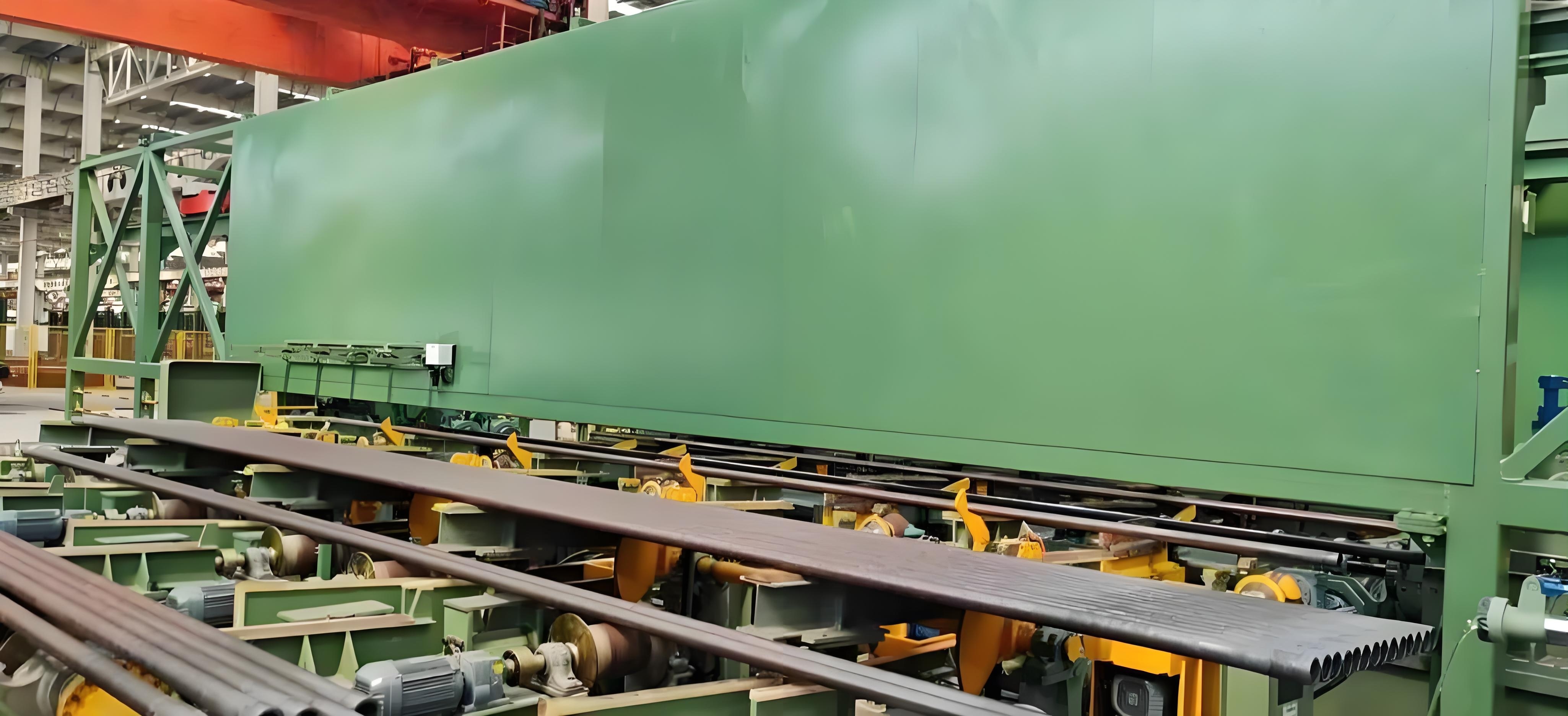
The reliance on hydrostatic testing ultimately comes down to risk control.
Seamless steel pipes are frequently manufactured for applications where pressure containment is an essential performance requirement. A failure after delivery can have consequences far beyond the cost of replacing an individual pipe.
By performing hydrostatic testing under controlled conditions before shipment, manufacturers have an additional opportunity to identify unacceptable pressure-integrity problems while the pipe is still within the manufacturing facility.
This supports three important objectives:
- Pressure integrity — the finished pipe is verified under the specified hydrostatic test condition.
- Process consistency — testing can be performed using a repeatable machine-controlled procedure.
- Quality assurance — test results can support production records and customer quality requirements where applicable.
For these reasons, hydrostatic testing is not simply an additional inspection performed at the end of production. For many seamless pipe applications, it is an integral part of demonstrating that the finished product meets its required pressure-performance criteria.
The Role of a Hydro Testing Machine for Pipe
For seamless steel pipe manufacturers, the real value of a hydrostatic testing machine is the ability to turn a pressure-integrity requirement into a controlled production process.
A suitable Hydro Testing Machine for Pipe can integrate pipe positioning, sealing, filling, pressurization, pressure holding, monitoring, and unloading into a repeatable testing cycle. The exact configuration should be selected according to pipe dimensions, required test pressure, applicable specifications, production capacity, and automation requirements.
The machine therefore serves two purposes at the same time: it provides the physical capability to perform hydrostatic pressure testing and provides the process control needed to perform that testing consistently in a manufacturing environment.
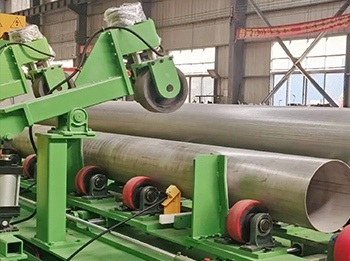
Seamless steel pipe manufacturers rely on hydrostatic testing machines because seamless construction alone does not prove pressure integrity. Manufacturing processes can introduce internal imperfections, material discontinuities, or other conditions that require verification under a defined pressure test.
Hydrostatic testing provides that verification by placing the finished pipe under a controlled internal pressure and checking its ability to maintain pressure integrity according to the applicable requirements.
For production-scale manufacturing, a dedicated hydro testing machine for pipe makes this process more controlled, repeatable, and compatible with modern pipe-mill operations. That combination of pressure verification and process consistency is why hydrostatic testing remains an important quality-control step for seamless steel pipe manufacturers.


