


 HOME
HOMEWhat Is a Seamless Pipe Making Machine How It Works
22 June 2025
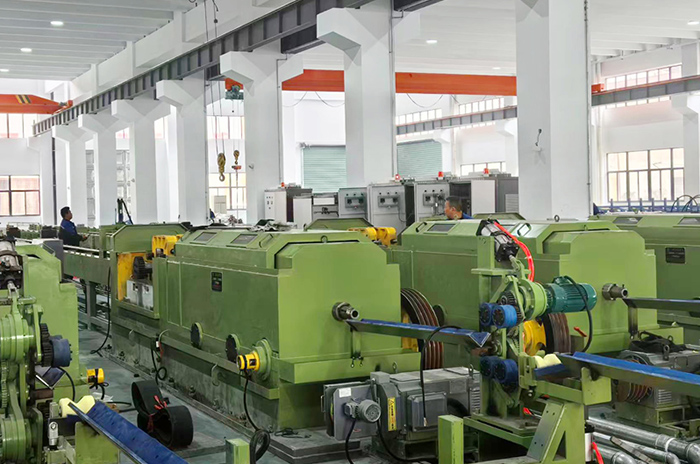
In the world of industrial steelwork, the seamless pipe making machine plays a pivotal role in producing high-strength, uniform tubes without any welding. Unlike conventional welded pipes, these seamless tubes are crafted from solid billets, delivering outstanding structural integrity and reliability.
1. Definition & Importance
A seamless pipe making machine transforms a solid steel billet into a hollow pipe without welds, which eliminates weak points and provides consistent material properties throughout the pipe. This is especially crucial in industries where high pressure, temperature resistance, and durability are non-negotiable—such as oil & gas, petrochemicals, and power generation.
2. Core Working Principle
The operation hinges on the rotary piercing (Mannesmann) method:
-
A heated steel billet is fed between two slightly skewed, rotating rolls, exerting both pressure and friction that cause internal cracks and a central void to form.
-
A mandrel (or plug) is inserted into this void, expanding the tube and refining wall thickness and diameter while pressure fuses internal fissures.
-
The nascent tube then proceeds through elongation, sizing, cooling, and straightening stages to meet strict geometric and mechanical specifications.
3. Manufacturing Steps at a Glance
-
Billet Heating: The billet is heated (often above ~1,000 °C) to become malleable.
-
Rotary Piercing & Mandrelling: The billet is pierced by skewed rolls, followed by mandrel insertion for hollow formation and dimension control.
-
Elongation & Sizing: The tube is rolled and stretched to reach desired diameter and wall thickness.
-
Cooling & Straightening: Controlled cooling maintains material integrity, and straightening corrects any warping.
-
Finishing & Inspection: Polishing, testing (such as hydrostatic tests), and cutting to length ensure compliance with industrial standards.
4. Advantages Over Welded Pipes
Seamless pipes made using this machinery offer:
-
Superior strength and uniformity, owing to the absence of welds.
-
Higher pressure tolerance and fatigue resistance, making them ideal for demanding applications.
-
Better corrosion resistance and dimensional precision due to consistent wall thickness and smooth internal surfaces.
5. Practical Applications
Widely utilized in:
-
Oil & gas pipeline systems and drill pipe
-
Heat exchangers, pressure vessels, and industrial hydraulic systems
-
Automotive, power generation, and chemical processing industries where reliability under stress is key


