


 HOME
How to Choose the Right Steel Peeling Machine for Precision Bar Processing
08 April 2026
If you’ve worked with hot-rolled steel bars, you already know the reality — they look nothing like the final product your customers expect.Rough surface, oxide scale, small cracks… all of these need to be removed before precision machining even begins. That’s where a Steel Peeling Machine comes in.But here’s the thing: not every Steel Peeling Machine delivers the same result.
Choosing the right one can mean the difference between stable production and constant quality issues.Let’s break it down in a practical way.
1. Start with the Real Goal: What Are You Trying to Achieve?
A Steel Peeling Machine is not just for “removing material.”
In real production, it is used to:
- Remove surface defects (scale, cracks, oxidation)
- Improve roundness and diameter accuracy
- Prepare bars for high-precision applications
This process significantly improves surface quality and dimensional consistency, making it essential before further machining
If your end product is hydraulic rods, automotive shafts, or precision components — your requirements are already high.
2. Diameter Range & Material Compatibility
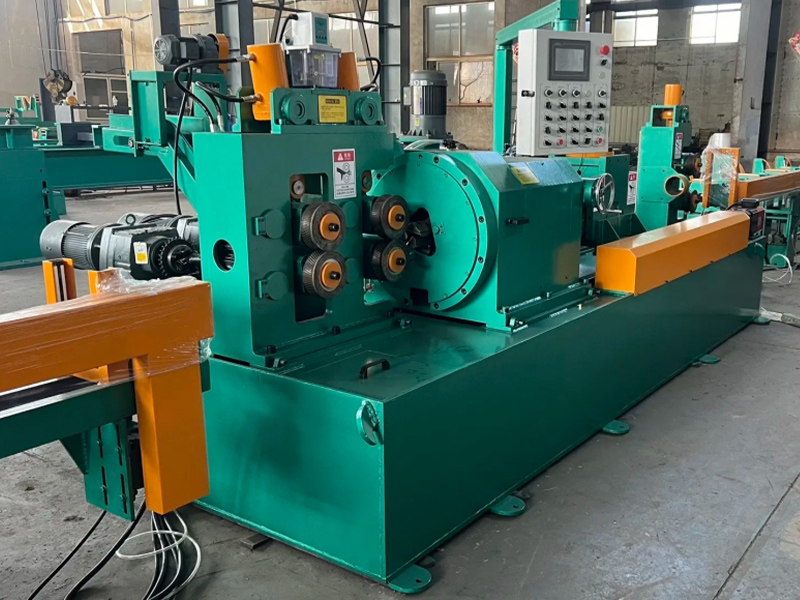
One of the biggest mistakes buyers make is choosing a Steel Peeling Machine that doesn’t match their actual production range.
Ask yourself:
- What is your minimum and maximum bar diameter?
- Are you processing carbon steel, alloy steel, or stainless?
Different machines are designed for different capacities — some handle small wire, others handle bars up to hundreds of millimeters
If your machine is constantly working at its limit, you’ll see:
- Instability
- Tool wear
- Inconsistent finish
3. Peeling Head Design
If you only focus on one thing — make it this.
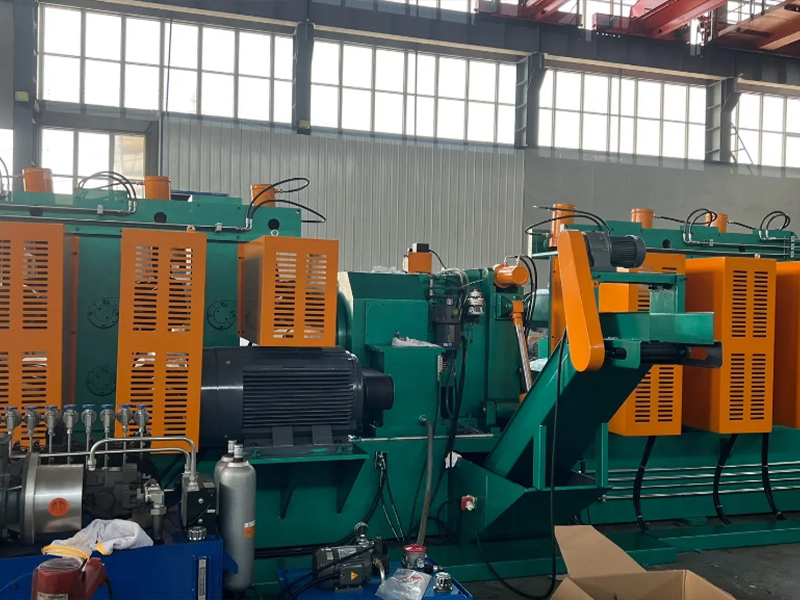
The peeling head determines:
- Cutting stability
- Surface finish
- Tool life
Most modern Steel Peeling Machine systems use multiple carbide inserts rotating around the bar, removing material evenly — almost like peeling an apple
But in real production:
- Poor design = uneven cutting
- Uneven cutting = vibration + bad surface
✔ A good system ensures:
- Equal cutting force
- Smooth rotation
- Stable removal depth
4. Surface Quality Requirements
Different industries require very different results.
|
Application |
Surface Requirement |
Recommended Machine Level |
|
Construction steel |
Medium |
Standard |
|
Automotive parts |
High |
Precision |
|
Hydraulic cylinders |
Very high |
High-end CNC |
A high-quality Steel Peeling Machine can:
- Remove controlled material layers
- Deliver consistent diameter
- Improve fatigue resistance
And yes — customers will notice the difference.
5. Production Efficiency & Throughput
Here’s where peeling machines really outperform traditional turning.
Compared to conventional machining:
- Peeling is significantly faster
- Often runs continuously
- Handles long bars easily
In fact, the process can operate much faster than turning while maintaining quality
In large-scale production, this directly affects:
- Cost per ton
- Delivery speed
- Profit margin
6. Automation Level: Where You Save Money Long-Term
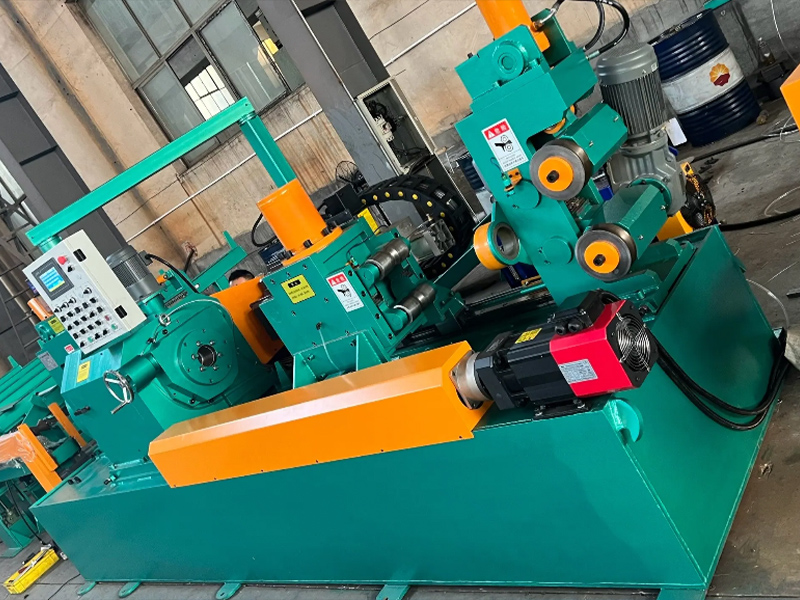
A modern Steel Peeling Machine is rarely just a standalone unit.
It often integrates with:
- Straightening machines
- Feeding systems
- Online measurement
Automation allows:
- Stable quality
- Less operator dependency
- Higher consistency
From experience:Factories that upgrade to automated peeling lines usually see fewer complaints and more repeat orders.
7. Real-World Comparison: What Actually Matters?
|
Factor |
Low-End Machine |
High-End Steel Peeling Machine |
|
Surface finish |
Inconsistent |
Smooth & uniform |
|
Stability |
Vibration risk |
Stable cutting |
|
Tool life |
Short |
Longer |
|
Efficiency |
Medium |
High |
|
Automation |
Manual |
Fully automatic |
8. A Practical Buyer Checklist
Before choosing a Steel Peeling Machine, ask:
- What diameter range can it handle?
- Is the peeling head stable at high speed?
- Can it process stainless steel efficiently?
- What is the real throughput per hour?
- Can it integrate into a full production line?
If the supplier avoids these questions — that’s a red flag.
Final Thoughts
A Steel Peeling Machine is not just another piece of equipment — it’s a critical step in producing high-quality precision bars.
The right machine will:
- Improve surface quality
- Reduce defects
- Increase efficiency
- Strengthen your overall production line
And in today’s competitive steel market, that’s exactly what you need to stay ahead.


