


 HOME
Why a Modern Centerless Lathe Is Essential for High-Quality Round Bar Production
24 March 2026
Walk into any serious steel bar production shop today, and you’ll notice something: the lines that run smoothly, hit tight tolerances, and ship fewer rejects almost always rely on a modern Centerless Lathe.
It’s not just about automation or speed. It’s about consistency — the kind that keeps customers coming back and inspectors quiet.Let’s break down why upgrading to a modern Centerless Lathe isn’t a luxury anymore — it’s a necessity if you care about round bar quality.
1. True Roundness Starts with the Right Process
Traditional machining methods clamp the bar. That alone introduces stress, deflection, and small distortions.
A modern Centerless Lathe works differently:
- No clamping
- Continuous support along the bar
- Rotation controlled by regulating wheels
This setup naturally corrects high spots and creates a perfectly round profile. In fact, the process removes irregularities until the entire surface becomes uniform.
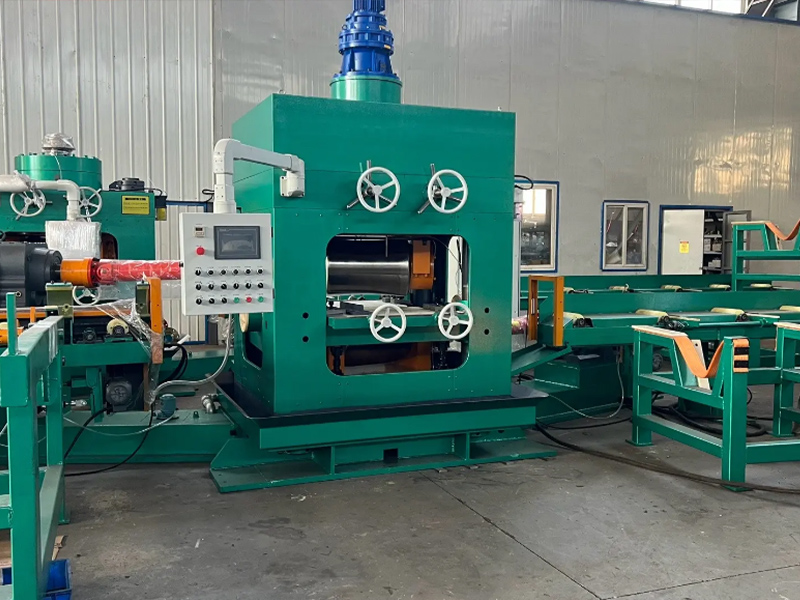
2. Superior Surface Finish (And Why It Matters More Than You Think)
Surface finish isn’t just about appearance.
A poor finish can lead to:
- Seal failure
- Increased friction
- Faster wear
A modern Centerless Lathe produces a smooth, non-directional finish that improves performance in real applications like shafts, bearings, and hydraulic rods.
This directly translates into:
- Longer service life
- Better mechanical efficiency
- Fewer downstream processing steps
Many manufacturers quietly save costs here — less polishing, less rework.
3. Tight Tolerances, Batch After Batch
Consistency is where older machines start to fall behind.
Because a Centerless Lathe supports the bar along its full length, it maintains uniform pressure and diameter control.
That means:
- Minimal diameter variation
- Stable tolerances across long bars
- Reliable repeatability
For industries like automotive, oil & gas, or precision machining, this isn’t optional — it’s expected.
4. High Efficiency = Real Production Advantage
Here’s the part people don’t always say out loud:
A modern Centerless Lathe makes money not just by improving quality — but by moving faster.
Why?
- No need for centering or chucking
- Continuous through-feed processing
- Minimal downtime between parts
This reduces non-productive time significantly compared to traditional grinding.
Some production lines can run almost continuously, which is why centerless processing dominates high-volume round bar manufacturing.
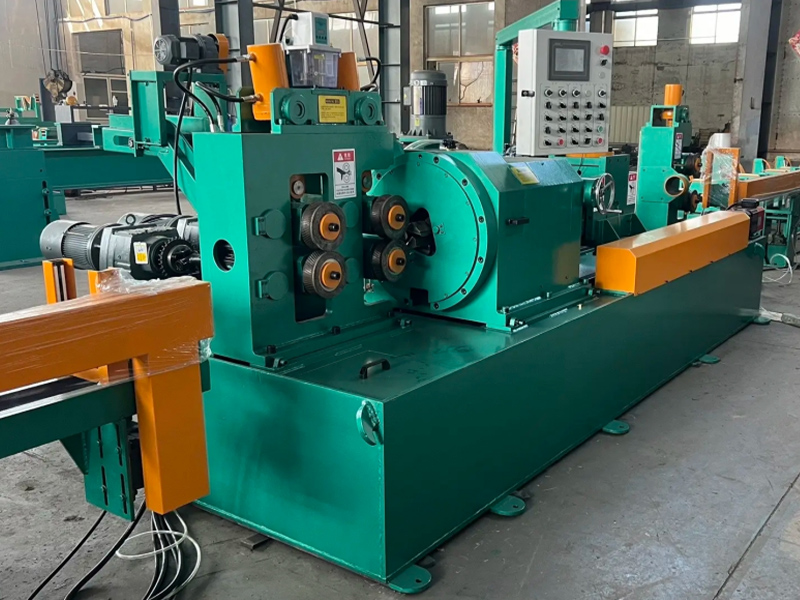
5. Stability for Long and Thin Bars
Long bars are where conventional machines struggle.
Deflection, vibration, bending — all common issues.
A Centerless Lathe solves this by supporting the bar throughout the process, eliminating bending forces and vibration.
Result:
- Better straightness
- Less runout
- Higher dimensional stability
If you’re producing long shafts or precision rods, this alone justifies the investment.
6. Modern vs Traditional: A Quick Comparison
Feature
Traditional Lathe / Grinding
Modern Centerless Lathe
Workholding
Clamped at ends
No clamping
Roundness
Operator-dependent
Self-correcting
Surface finish
Variable
Consistent & smooth
Efficiency
Slower, batch-based
Continuous processing
Long bar handling
Limited
Excellent
Automation
Low
High
7. Real-World Impact on Production
Let’s be honest — most factories don’t upgrade equipment just for “better theory.”
They do it because:
- Scrap rates drop
- Output increases
- Customer complaints disappear
A modern Centerless Lathe directly impacts:
- Cost per ton
- Delivery reliability
- Brand reputation
And in competitive export markets (especially steel products), those three things decide who wins orders.
Final Thoughts
A Centerless Lathe is no longer just a piece of equipment — it’s a core part of a high-quality production strategy.
If your goal is to produce round bars that are:
- Precisely sized
- Smoothly finished
- Consistently reliable
Then a modern Centerless Lathe isn’t optional — it’s essential.Because in this business, “almost round” doesn’t sell.


