


 HOME
How to choose the chamfering machine equipment suitable for your project?
01 October 2025
Choosing the right chamfering machine isn’t just about picking the most advanced or expensive model. It’s about matching machine capabilities to your specific project needs. Many buyers make the mistake of over-spec’ing (which raises cost) or under-spec’ing (leading to poor quality or failure). In this blog, I’ll walk you through a practical, down-to-earth approach to decide which chamfering (beveling) machine is suitable for your application, especially for pipes.
1. Understand your project requirements
Before you even browse catalogs, gather the following key parameters:
-
Pipe diameter (OD) and wall thickness (WT). The range you expect to process (min, max) will narrow down machine classes.
-
Material type. Stainless steel, carbon steel, alloy, etc. Harder or tough materials need more rigidity, power, or specific tooling.
-
Type of chamfer / bevel profile. Do you just need a simple 45° chamfer? Or more complex bevels (J, U, compound bevels)?
-
Production volume / throughput. Are you doing few custom pieces or hundreds per day? That changes whether manual, semi-automatic, or fully automatic is justified.
-
Tolerance & surface finish needed. Some welding or fitting applications require very tight tolerance on bevel angle and smoothness.
-
Space, floor load, power supply constraints. Your factory layout, ceiling height, power (voltage, phase), foundation strength all influence which machines you can deploy.
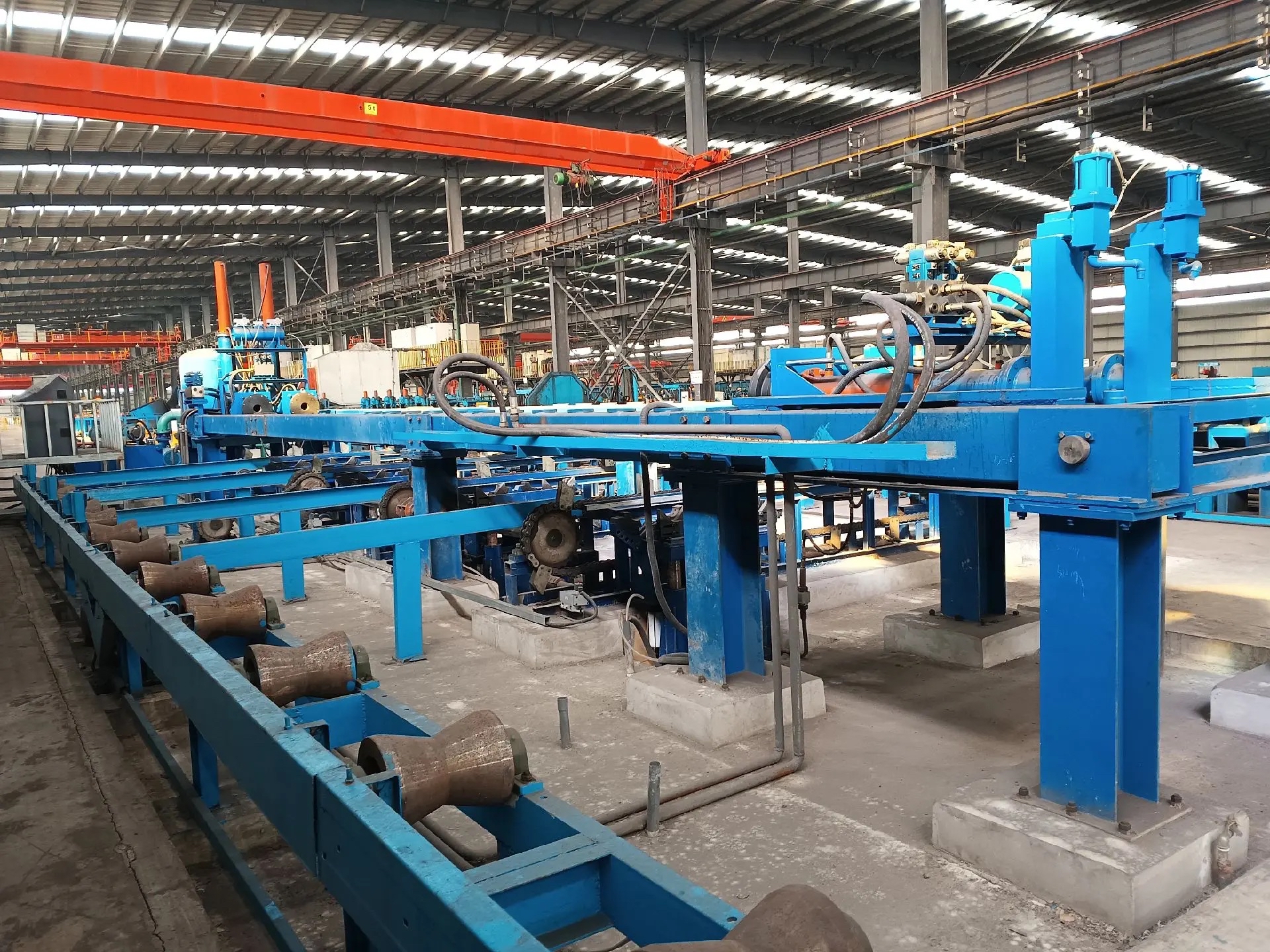
2. Match machine type to scale & automation
Chamfering machines broadly fall into several categories (this is based on how many suppliers and catalogs classify): handheld/portable, semi-automatic, fully automatic, stationary (bench type), internal / external clamping, dual-end machines, etc. For pipes especially, many industrial players offer specialized machines.
Here’s how to think about it:
-
Portable / handheld / small bench units — good for on-site jobs, repair, limited volumes, or fixed diameter ranges.
-
Semi-automatic / single-end machines — for moderate volumes, repeatable but still operator involvement. Many tube chamfering machines fall in this class.
-
Fully automatic / dual-end / long-length machines — for high throughput, long pipes, minimal operator interaction. Some machines handle both ends simultaneously or even integrate with feeding / loading systems.
If your project is large-scale production, leaning toward automation often yields better ROI in the long run (labor savings, consistency).
3. Key technical considerations and trade-offs
When comparing candidate machines, focus on these technical metrics and see how they align with your requirements:
|
Metric |
Why It Matters |
What to Check |
|
Power / motor torque |
To handle thicker walls / tougher materials |
Ensure motor can sustain load without overheating |
|
Spindle speed / rpm range |
Some materials / bevels need different speeds |
Variable speed gives flexibility |
|
Feed mechanisms |
Smooth, controlled feed gives better finish |
Whether hydraulic, servo, screw, etc. |
|
Clamping / grip method |
Proper grip avoids slippage or distortion |
Prism clamps, internal/external, self-centering designs |
|
Repeatability & positioning accuracy |
Especially vital when tolerances are tight |
How precise is the machine in angle, depth, parallelism |
|
Tooling compatibility / tool changeover ease |
You may need to change bevel angles or materials |
Ease & cost of tool changes is important |
|
Maintenance, spare parts availability |
Downtime kills productivity |
How easy to get cutters, bearings, etc. |
|
Safety & ergonomics |
For operator safety & compliance |
Guards, chip removal, control interfaces |
|
Cost vs lifetime |
Total cost over life (capex + maintenance) |
Don’t just pick the cheapest — pick the one with best long-term value |
4. Practical steps to narrow your shortlist
After you have your requirements and a sense of machine classes, here’s a practical workflow:
-
Filter by capability — eliminate machines that can’t cover your max OD or wall thickness, or can’t do the bevel profile you require.
-
Check throughput vs cost — see whether a semi-automatic unit might suffice, or if you need fully automatic to hit your daily output target.
-
Ask for sample processing / test run — send a sample pipe and ask the vendor to show. You can inspect finish, angle, burrs.
-
Evaluate total cost of ownership (TCO) — factor in tooling, spare parts, operator training, downtime risk.
-
Plan for growth / flexibility — if your business may expand to larger pipes later, pick a machine that can scale or adapt.
-
Inspect support & service network — local support, spare part availability, technical training are key, especially for overseas purchases.
5. Avoid common pitfalls
-
Over-spec’ing — buying a huge machine far beyond your needs just because “bigger is safer” leads to wasted capital and inefficiency.
-
Neglecting tooling cost — expensive cutters or rare tooling options can erode your margins.
-
Ignoring floor & infrastructure constraints — some machines are heavy or need reinforced foundations, high ceilings, etc.
-
Skimping on accuracy — cheap machines may drift, deliver poor bevel consistency, causing welding or fitting issues.
-
Not considering modular upgrades — a machine that allows later automation add-ons (robotic loading, auto feeders) is more future-safe.
6. Sample user case (hypothetical)
Suppose you have a project to bevel carbon steel pipes from 90 mm to 300 mm OD, wall thickness up to 10 mm, mostly with 45° bevel, and a production target of 200 pipes per day. The material is fairly standard (not exotic alloy), and your plant has 3-phase power and moderate space.
-
You can exclude small handheld machines (range too low).
-
A semi-automatic single-end machine might suffice, but due to volume, a dual-end or automatic machine might reduce cycle time.
-
You’ll want variable spindle speeds so you can optimize for the 90 mm pipes vs 300 mm ones.
-
You want a seller who can provide tooling sets (45° cutters) and spares locally.
-
You will ask vendors to run sample pipes and check bevel accuracy, burr, and consistency.
With that, you narrow down to 2–3 machines, ask quotes including installation, training, spare parts, and compare TCO before making decision.
7. Conclusion & recommendation
Selecting the ideal chamfering machine is a balance: you must align machine capability (diameter, wall, bevel type), production scale, and long-term cost. It’s often better to choose a flexible, modular machine that gives you room to grow, rather than the cheapest one that just meets the current spec. And always validate with sample runs and vendor support before committing.


